.png)



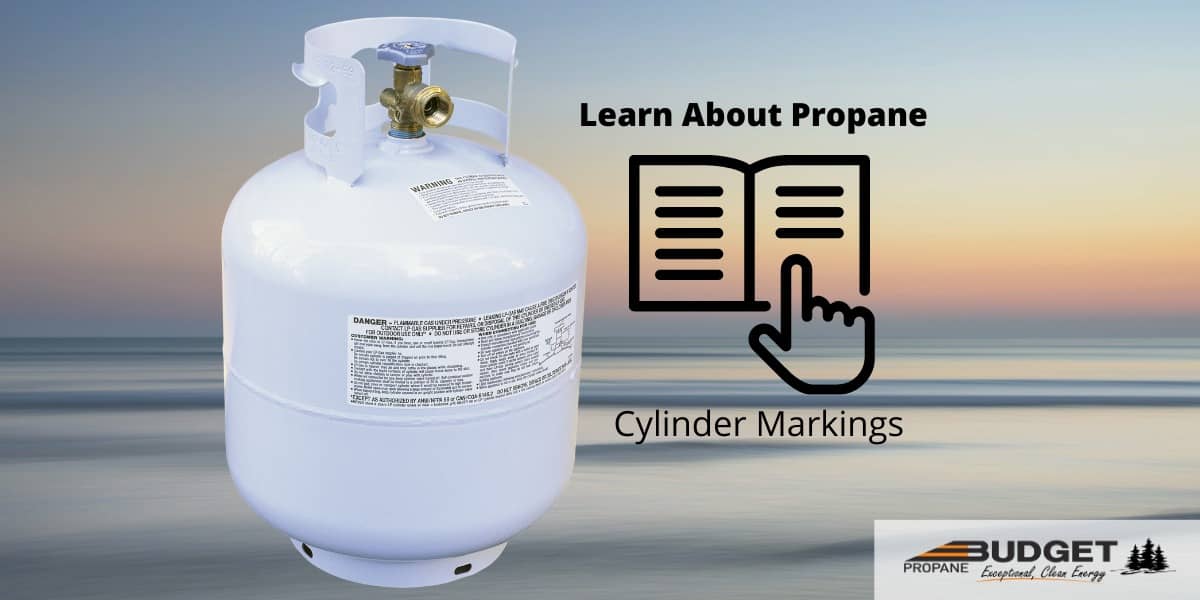
Propane cylinder collar markings provide important information about a cylinder's design, capacity, manufacturing date, and safety certification. These stamped codes help propane suppliers, inspectors, and consumers determine whether a cylinder is approved for use in Canada and whether it is due for requalification. Understanding these markings can help you identify your cylinder and ensure it can be safely filled and used.
Did you know it's against the law for an expired or damaged cylinder to be filled? Propane cylinders have a range of identifying marks that tell consumers and handlers if the cylinder is approved and when it was tested.
Here's some information that identifies codes and dates stamped onto the collar.
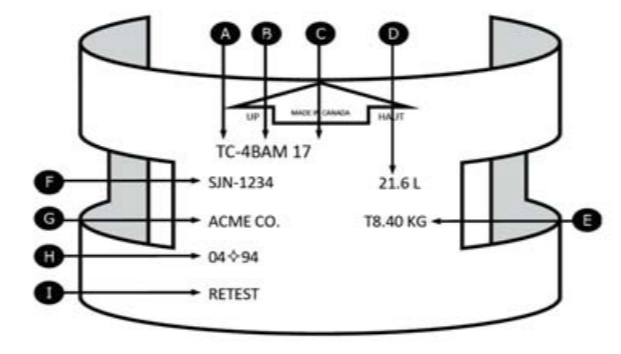
A - TC - Transport Canada Design Specification: Shows that the cylinder has been designed to Transport Canada specifications and can be used and filled in Canada. Letters TC
B - Reference TC specification number
C - Working pressure of the cylinder (17 bars=1.7 MPa)
D - Water capacity in litres (volume)
E - Letter T followed by the tare weight (the weight of the empty cylinder including the valve)
F - Manufacture's serial number
G - Manufacturer's name or symbol
H - Test month Manufacture's Serial Stamp - month (2 digits), separator, year (last 2 digits)
I - Space to indicate a retest date. Propane cylinders need to be re-qualified or replaced every 10 years. This date will show when the re-qualification took place.
Budget Propane is a family owned and operated bulk propane supplier in Central Ontario. Visit our website to learn more about propane!
FAQs
How can I tell if my propane cylinder is approved for use in Canada?
Look for the letters "TC" stamped on the collar. This indicates the cylinder meets Transport Canada specifications and is approved to be filled and used in Canada.
How often does a propane cylinder need to be requalified?
Most portable propane cylinders must be requalified or replaced every 10 years from the date of manufacture. After the initial requalification, the inspection interval may vary depending on the method used.
Can an expired propane cylinder be filled?
No. Propane retailers cannot legally fill a cylinder that has exceeded its requalification period or fails a visual safety inspection.
Why are propane cylinder inspections important?
Regular inspections help identify damage, corrosion, leaks, or other safety concerns. Properly maintained and qualified cylinders help ensure the safe storage and transportation of propane.
What should I do if I cannot read the markings on my propane cylinder?
If the collar markings are damaged, worn, or unreadable, have the cylinder inspected by a qualified propane supplier. In some cases, the cylinder may need to be removed from service and replaced.
Like the article?
Share it with your friends!