.png)



.webp)
As cooler weather arrives in Ontario, a propane patio heater can help extend the time you spend outdoors. Whether you're enjoying your backyard, cottage deck, restaurant patio or another outdoor space, portable propane patio heaters provide convenient warmth when temperatures start to drop.
Like any propane appliance, however, patio heaters need to be installed, operated and stored properly.
How Do You Use a Propane Patio Heater Safely?
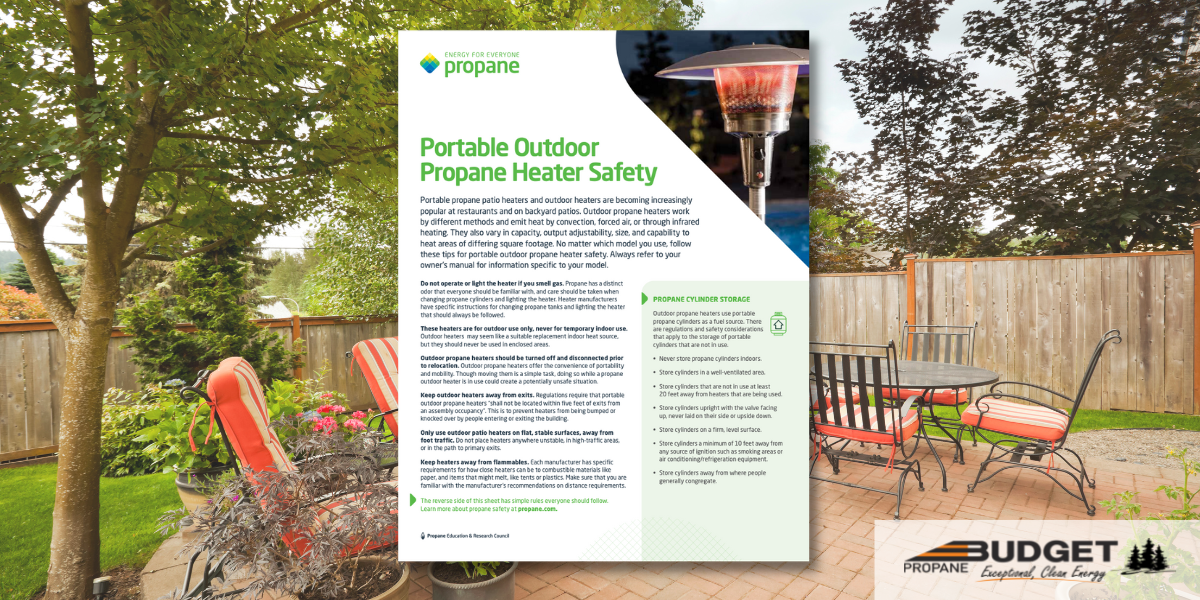
Propane patio heaters should be used outdoors in well-ventilated areas and placed on a flat, stable surface away from combustible materials and busy walkways. Always follow the heater manufacturer's instructions for lighting, cylinder changes, clearances and storage. Never use an outdoor propane patio heater inside a home, garage, shed, tent or other enclosed space.
Here are six important propane patio heater safety tips to keep in mind.
1. What Should You Do If You Smell Propane?
Never light or continue operating a patio heater if you smell propane.
Propane has an odorant added to help make a potential leak easier to detect. If you smell propane around your patio heater, do not attempt to light it or continue using it.
Pay particular attention when connecting or changing a propane cylinder. Connections and lighting procedures can vary between patio heater models, so always follow the manufacturer's instructions.
If you suspect a propane leak, keep ignition sources away from the area and follow appropriate propane safety procedures.
2. Can You Use a Propane Patio Heater Indoors?
No. Outdoor propane patio heaters are designed for outdoor use and should never be used as a temporary indoor heating source.
Don't bring an outdoor patio heater inside because the temperature has dropped. That includes enclosed or inadequately ventilated spaces such as:
- Homes
- Garages
- Sheds
- Enclosed porches
- Tents or similar structures
Always use propane appliances only for their intended purpose and according to the manufacturer's instructions.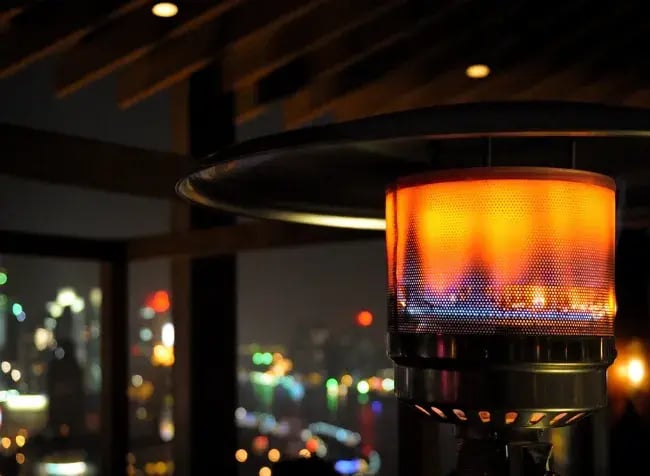
3. Can You Move a Propane Patio Heater While It Is Running?
A major benefit of portable propane patio heaters is that they can be repositioned around an outdoor space. However, the heater should be turned off before it is relocated.
The Canadian Propane Association recommends never moving a portable patio heater while the flame is lit. Shut off the propane supply and allow the heater to cool as directed by the manufacturer and follow the manufacturer's instructions before moving or disconnecting the appliance.
Choose the heater's location before lighting it so you aren't tempted to reposition it while it is operating.
4. Where Should You Place a Propane Patio Heater?
Patio heater placement is an important part of safe operation.
Place your heater on a flat, stable surface where it is unlikely to be bumped, tipped or knocked over.
Avoid placing a patio heater:
- In busy walking areas
- Near doors or exits
- On uneven or unstable surfaces
- Where children or pets could easily knock into it
- In locations where the heater could interfere with people entering or leaving the area
Commercial patios and assembly occupancies may also be subject to specific requirements regarding the placement and use of propane patio heaters. Ontario businesses should ensure their equipment and setup comply with applicable requirements..webp?width=650&height=476&name=Blog%20Images%20(1).webp)
5. How Far Should a Patio Heater Be From Combustible Materials?
Maintain the clearances specified by the patio heater manufacturer.
Patio heaters produce significant heat, so they should be kept away from combustible or heat-sensitive materials. Depending on your outdoor space, these could include:
- Patio umbrellas
- Furniture and cushions
- Paper products and decorations
- Plants and dry vegetation
- Fences and exterior structures
- Awnings, canopies and other overhead materials
There isn't one clearance measurement that should be assumed to apply to every patio heater. Check the owner's manual for your specific model and maintain the manufacturer's required clearances.
6. How Should You Handle the Propane Cylinder?
Before connecting a propane cylinder to your patio heater, inspect it for obvious damage and make sure it is suitable for use.
The cylinder should remain upright and properly secured when connected to the appliance. Follow the heater manufacturer's instructions when installing, removing or replacing the cylinder.
Never modify the cylinder, regulator, hose or other components in an attempt to make a connection fit.
Propane Patio Heater Safety at a Glance
|
Do |
Don't |
|
Use the heater outdoors |
Use an outdoor heater indoors |
|
Place it on a flat, stable surface |
Place it where it could easily tip |
|
Follow manufacturer clearances |
Position it close to combustible materials |
|
Turn the heater off before moving it |
Relocate it while operating |
|
Follow instructions when changing cylinders |
Modify propane connections |
|
Stop using the heater if you smell propane |
Attempt to light a heater when propane is detected |
Before You Light Your Patio Heater
A quick check before each use can help you identify potential problems before lighting your propane patio heater.
Make sure the heater is stable, the surrounding area is clear, the propane cylinder and connections appear to be in good condition, and nothing has been placed too close to the heater since it was last used.
If your heater has been stored for an extended period, consult the manufacturer's instructions before putting it back into service.
Propane Patio Heaters in Central Ontario
In Muskoka and throughout Central Ontario, September doesn't necessarily mean outdoor season is over. Propane patio heaters can provide convenient outdoor heating for homes, cottages, restaurants and businesses as temperatures begin to cool.
Safe operation starts with using the right equipment for the space, following manufacturer instructions and handling propane cylinders properly.
Budget Propane supplies propane throughout Central Ontario and also offers propane cylinder refills at our Gravenhurst location, making it convenient to refill cylinders used for patio heaters and other approved propane appliances.
Frequently Asked Questions About Propane Patio Heaters
Can I use a propane patio heater in my garage with the door open?
Outdoor propane patio heaters should not be used as indoor or enclosed-space heaters. An open garage door does not turn a garage into an outdoor space. Use the appliance only in locations permitted by its manufacturer.
Can I use a propane patio heater under a covered patio?
It depends on the heater, the structure and the manufacturer's required clearances and ventilation requirements. Never assume that an overhead covering is safe simply because the sides of the patio are open. Consult the instructions for your specific heater.
Can you use a propane patio heater at a cottage?
Yes, provided the heater is designed for outdoor use and is operated according to the manufacturer's instructions. Keep it on a stable surface and maintain the required distance from buildings, decks, furniture and other combustible materials.
Where can I refill a propane patio heater tank in Muskoka?
Budget Propane offers propane cylinder refills at our Gravenhurst location, serving customers in Muskoka and surrounding areas. Make sure your cylinder is eligible to be filled and transported safely to the refill location with our cylinder transportation blog.
Should I disconnect my propane tank from my patio heater when I'm finished?
Follow the storage and shutdown instructions provided by your patio heater manufacturer. Requirements can vary depending on the appliance and how and where it will be stored.
Like the article?
Share it with your friends!


.png)