.png)



Choosing the right propane tank size isn’t always as straightforward as it seems. Go too small, and you’ll find yourself making frequent refill trips. Go too large, and you may be dealing with more weight and capacity than you really need.
Whether you’re grilling at home, heading out in your RV, or using propane for supplemental residential needs, the right tank size comes down to how you use it.
Here’s a practical guide to help you make the right choice.
Common Propane Tank Sizes in Canada
Propane tanks come in a range of standard sizes, each suited to different types of use:
- 20 lb tank – The most common size for BBQs and patio heaters
- 30 lb tank – A popular option for RVs and moderate use
- 40 lb tank – Ideal for larger RVs or higher demand setups
- 100 lb tank – Typically used for residential applications or multiple appliances
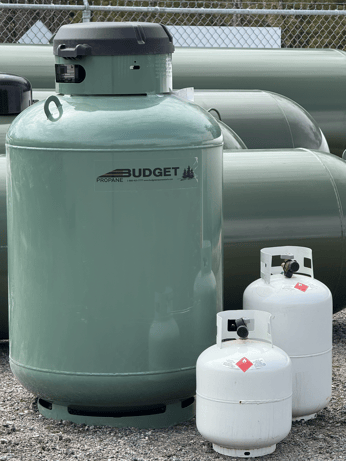
The main difference between these sizes comes down to capacity versus portability. Smaller tanks are easier to move, while larger ones reduce how often you need to refill.
Choosing the Right Tank for Your Needs
BBQ & Outdoor Living
For most homeowners, a 20 lb tank is more than enough for regular grilling.
If you:
- Grill frequently
- Use multiple outdoor appliances (like a patio heater or fire table)
- Host often
…it may be worth keeping a second tank on hand so you’re never caught empty mid-cook.
RV & Camping
RV setups typically use 20 lb, 30 lb, or 40 lb tanks, depending on the size of the unit and how it’s used.
Consider:
- How long your trips are
- Whether you’re running heat, a fridge, and hot water
- How easy it is to access refills on the road
Larger tanks mean fewer refills—but also more weight to manage. Many RVers choose a balance between capacity and convenience.
Home & Residential Use
For residential applications, 100 lb tanks or larger systems are more common.
These are often used for:
- Supplemental heating
- Backup generators
- Outdoor kitchens or appliances
 In these cases, reliability is key. A larger tank helps reduce the chances of running out—especially during periods of higher use.
Key Factors to Consider
Before deciding on a tank size, think about how propane fits into your day-to-day use:
- How often you use it – Occasional grilling vs. daily use
- Number of appliances – One BBQ vs. multiple systems
- Seasonal demand–Colder weather typically means higher usage
- Storage space – Where the tank will be kept
- Ease of transport – Especially important for RVs or refills
Taking a few minutes to think through these factors can help you avoid choosing a tank that doesn’t quite fit your needs.
Refill and Convenience Considerations
There’s always a trade-off between convenience and capacity.
- Smaller tanksare easier to carry and transport, but require more frequent refills
- Larger tanks last longer but can be heavier and less portable
Some people prefer to keep multiple smaller tanks instead of one large one—giving them flexibility and a built-in backup.
Common Mistakes When Choosing a Tank
A few common missteps can lead to frustration down the line:
- Choosing a tank that’s too small and running out often
- Going too large without considering how it will be moved or stored
- Not accounting for higher usage during busy periods or colder weather
- Not having a backup tank available when needed
Avoiding these comes down to matching your tank size to your actual usage—not just what’s most common.
Final Thoughts
There’s no one-size-fits-all answer when it comes to propane tanks. The right choice depends on how you use propane, how often you rely on it, and how much convenience matters to you.
With a bit of planning, you can find a setup that keeps things simple, reliable, and ready when you need it.
If you’re not sure which tank size makes the most sense for your setup, Budget Propane can help you choose the right option—and make sure you’re set up with reliable refills when you need them.
FAQs
What are the benefits of using propane for multiple household appliances?
Using propane for multiple appliances can simplify your home's energy system while providing reliable performance for cooking, hot water, fireplaces, backup power, and more. Many homeowners choose propane because it offers a versatile energy source that can support both everyday comfort and emergency preparedness.
Do local propane suppliers offer residential propane delivery for cottages?
Yes. Many propane suppliers offer residential propane delivery for cottages, seasonal properties, and year-round homes. Regular propane delivery helps ensure homeowners have a consistent fuel supply for heating, hot water, cooking, fireplaces, and propane generators throughout the year.
Is a propane generator a good backup power solution for rural properties?
A propane generator is one of the most reliable backup power options for rural homes and cottages. Because propane is stored on-site, homeowners have immediate access to fuel during power outages, helping keep essential systems such as refrigerators, water pumps, lighting, and communication devices operating when electricity is unavailable.
How do I know which propane appliances are right for my home or cottage?
The best propane appliances depend on your property's size, occupancy, and energy needs. A local propane supplier can help evaluate your usage patterns and recommend solutions such as propane water heaters, fireplaces, cooking appliances, backup generators, or outdoor living features that fit your lifestyle and budget.
Like the article?
Share it with your friends!